BATAM_Batam often attracts travelers with its malls and seafood restaurants. However, the real highlight lies beyond its coastline.
Across its southern waters, dozens of small islands form a quiet archipelago that many visitors overlook. These islands shift the experience, turning a simple urban escape into a deeper coastal journey.
Six Hidden Islands in Batam
1. Tunjuk Island
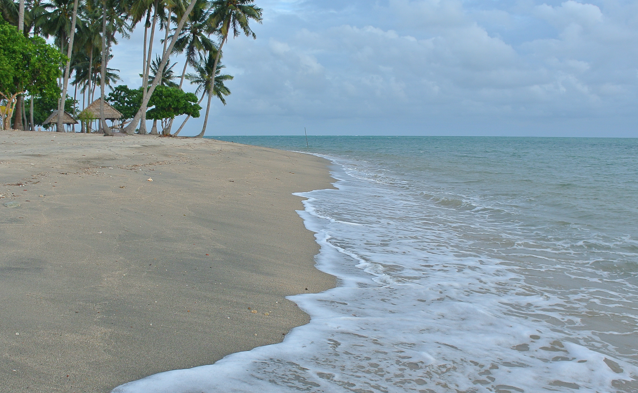
Tunjuk Island constantly reshapes itself with the tide. As the water recedes, white sand stretches outward. Then, as the tide rises, the shoreline pulls back again. Because of this movement, the landscape never looks the same twice.

Pulau Tunjuk/seniberjalan
Moreover, the island remains sparsely populated. This lack of development creates a raw and quiet environment. Instead of crowds, you will find open sandbars and wide horizons. As you walk along the shore, you can clearly see how the sea shapes the land.
Overall, this shifting coastline reflects a larger pattern across Batam’s outer islands, where tidal changes influence both daily life and travel routes.
Read This: Batam Travel Guide: 10 Best Things to Do
2. Subang Mas Island
Subang Mas Island offers clarity in every sense. The water appears almost transparent, while soft turquoise tones stretch toward the shore.
At the same time, the island remains calm and uncrowded. Visitors often describe it as a “private beach without the price.” Here, you can swim, float, or simply sit without interruption.

Subang Mas/seniberjalan
Because of its peaceful setting, many Batam-based travel blogs consistently include Subang Mas in lists of hidden destinations, alongside islands like Mubut and Ranoh. This recognition strengthens its reputation as a quiet coastal retreat.
3. Ranoh Island
Unlike the previous islands, Ranoh Island brings energy into the journey. While others focus on stillness, Ranoh emphasizes activity.
Here, you can snorkel in shallow reefs, paddle a canoe, or join beach games. In addition, operators have developed the island specifically for day trips, making access and activities more organized.
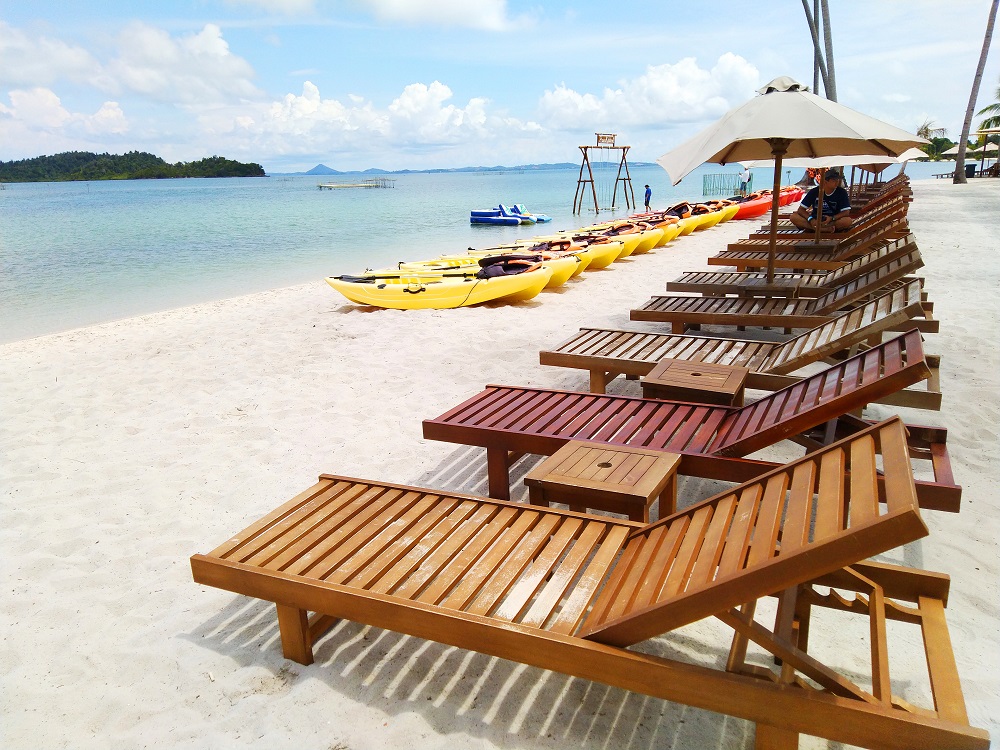
Ranoh Island/seniberjalan
As a result, Ranoh creates a clear contrast. Island hopping in Batam feels dynamic because each island offers a different pace, from quiet isolation to social interaction.
4. Karas Kecil Island
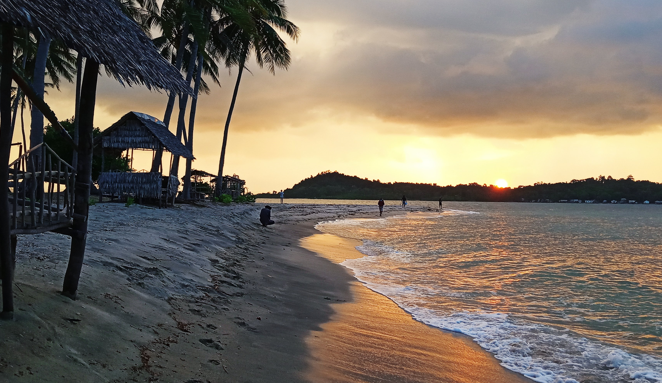
Karas Kecil Island connects natural beauty with history. A Dutch-built lighthouse from 1886 still stands on the island, marking a time when these waters played a key role in maritime routes.
Pulau Anak Karas Batam
Meanwhile, nearby islands such as Karas remain home to local communities. Residents continue to rely on fishing, small-scale trade, and inter-island travel. Their daily routines reflect a coastal lifestyle that has remained largely unchanged.
Because of this, the island offers more than scenery. It presents a living narrative shaped by both history and local life.
Read This: Asal Usul Mi Tarempa
5. Mubut Island
Mubut Island returns the journey to simplicity. Coconut trees line the shore, soft sand cushions each step, and gentle waves create a steady rhythm.

Pulau Mubut Darat/seniberjalan.com
Unlike more active destinations, Mubut encourages you to slow down. There are no structured activities or major attractions. Instead, you can sit, walk, or simply observe your surroundings.
For this reason, many travel references highlight Mubut as a place of calm and balance, part of a broader network of islands that define Batam’s coastal character.
6. Putri Island
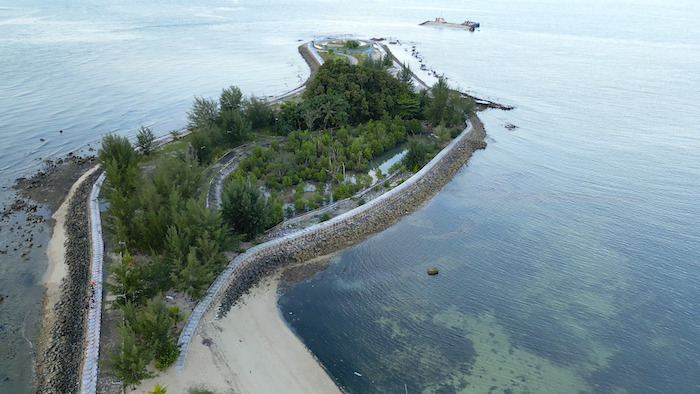
Putri Island may cover only five hectares, but it leaves a strong impression. Its small size allows you to explore it easily, yet its atmosphere encourages you to stay longer.
Pulau Putri Batam_seniberjalan
As the day ends, the island transforms. The light softens, shadows stretch, and the sea reflects warm colors across the horizon. Because of this shift, the experience feels more intimate and almost cinematic.
Ultimately, this final stop often defines the entire journey, not because of its size, but because of its timing.